Artificial Reefs An Effective Way to Recycle Tires Biology Diagrams Artificial reefs offer new hard substrate habitats that can enhance the survival and the development of large adults and mature stages of different taxa. Studies have demonstrated that well designed artificial reefs can not only attract marine life from the surrounding environment but also lead to the production of a new food chain. Over the past decade, there has been increasing interest in marine restoration, requiring a consideration of various approaches for optimal success. Artificial reefs (ARs) have been employed for marine restoration and fisheries management, but their effectiveness in restoring ecosystems lacks well-defined ecological criteria and empirical evidence. A systematic review of the literature on ARs

Artificial coral reefs (ACRs), including submerged man-made structures placed on the substrate, in mid-water, or floating on the surface, have been suggested as a potential tool for restoration of marine resources, improving the catch rate of a variety of fish species, protecting natural ecosystems, and providing new habitat by creating habitats for fishes and invertebrates, enhancing the
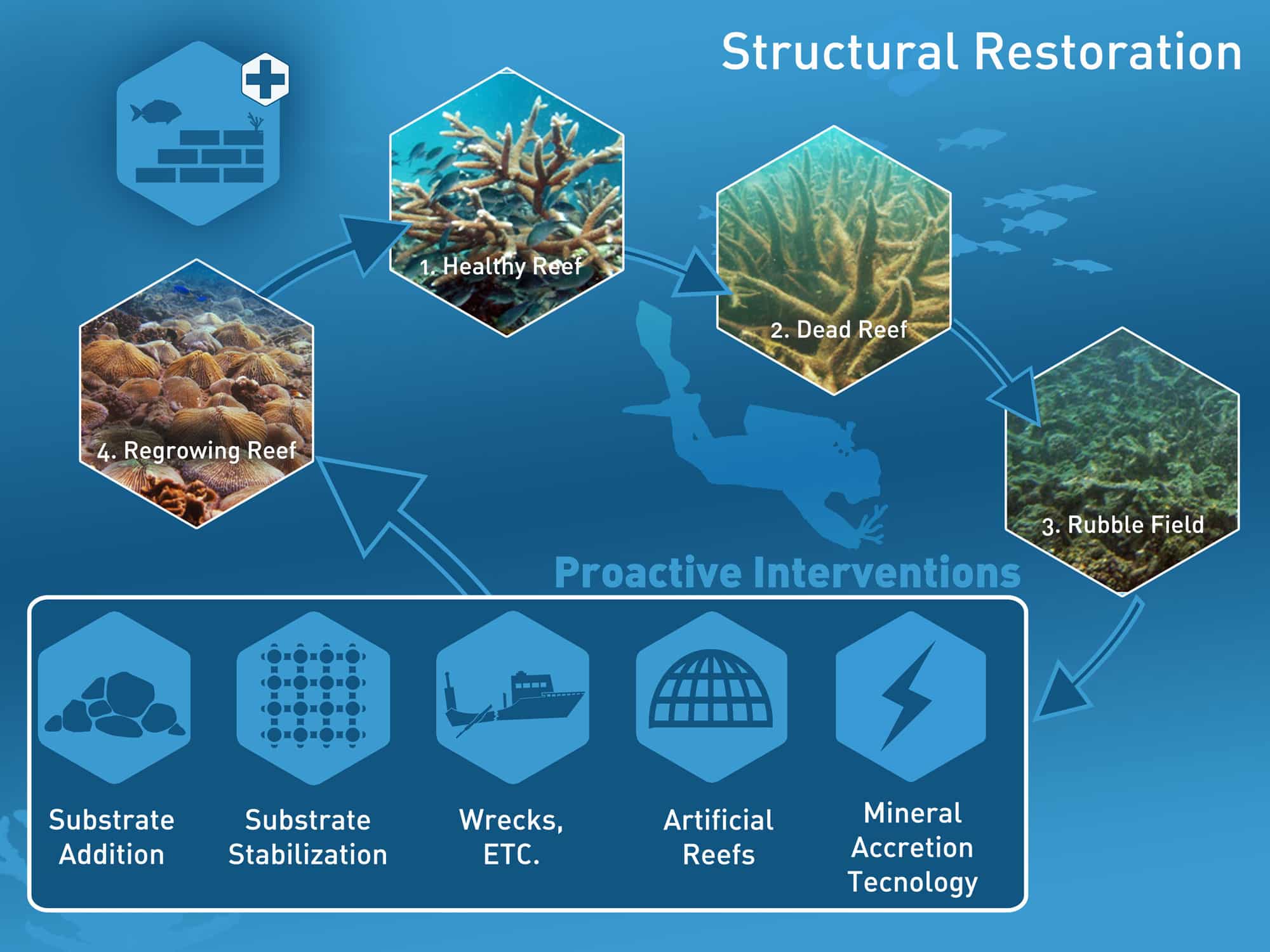
What is Currently Being Done? Biology Diagrams
Results of the review include ref:. 10 coral restoration intervention types were identified, with direct transplantation and coral gardening being the most common methods. Other interventions included: artificial reefs, substrate enhancement with electricity, substrate stabilization (4%), algae removal, larval enhancement, and micro-fragmentation.

we aimed to examine biodiversity and complexity of the food web network in biodegradable artificial reef structures that were geared towards the initiation of a self-facilitating shellfish reef in a soft- sediment intertidal ecosystem. To do so, we conducted a 2.5-year long large-scale restoration experiment (650 m) using bare controls and

Artificial Reefs around the World: A Review of the State of the ... Biology Diagrams
Coral reefs, which cover less than 1 per cent of the ocean floor but support 25 per cent of all marine life, play a critical role in food security, coastal protection and livelihoods in climate-vulnerable regions. But in the last 15 years the world has lost 14 per cent of its coral reefs, some of which have existed for as much as 5,000 years
